Smart seat controller
Seat motors, heating and ventilation controlled from the body network.
Function
Drives seat-position motors, heater pads and ventilation fans, remembers driver positions, and responds to commands from the body controller over LIN.
Design choices
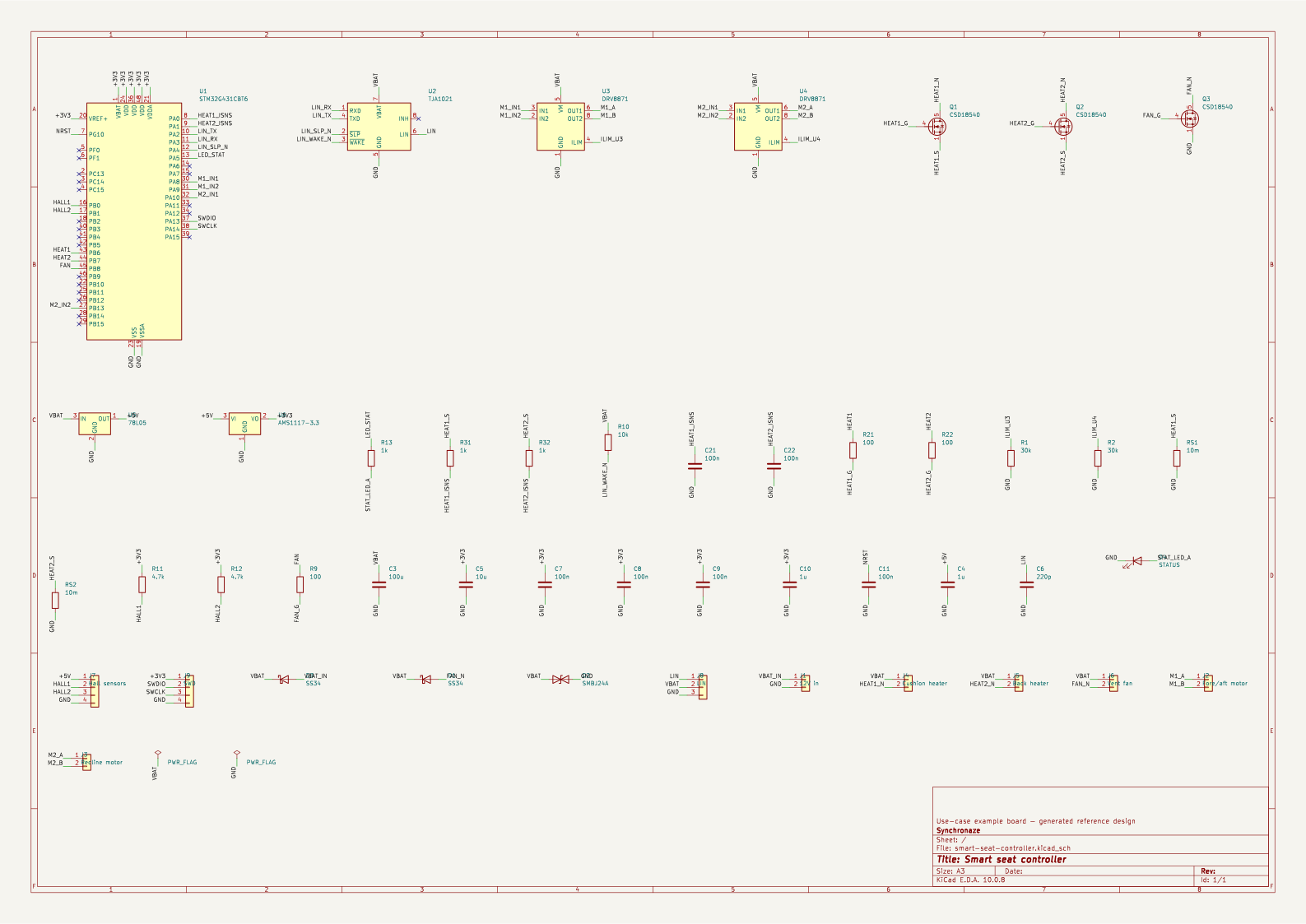
- Two DRV8871 H-bridges with current limiting for the fore/aft and recline motors.
- Low-side MOSFET heater switches, each with a 10 mΩ shunt so the MCU can measure heater current.
- Hall-sensor inputs for counting motor revolutions, used to recall memory positions.
- TJA1021 LIN transceiver to the body controller, with a TVS diode and reverse-polarity protection on the 12 V input.
Schematic
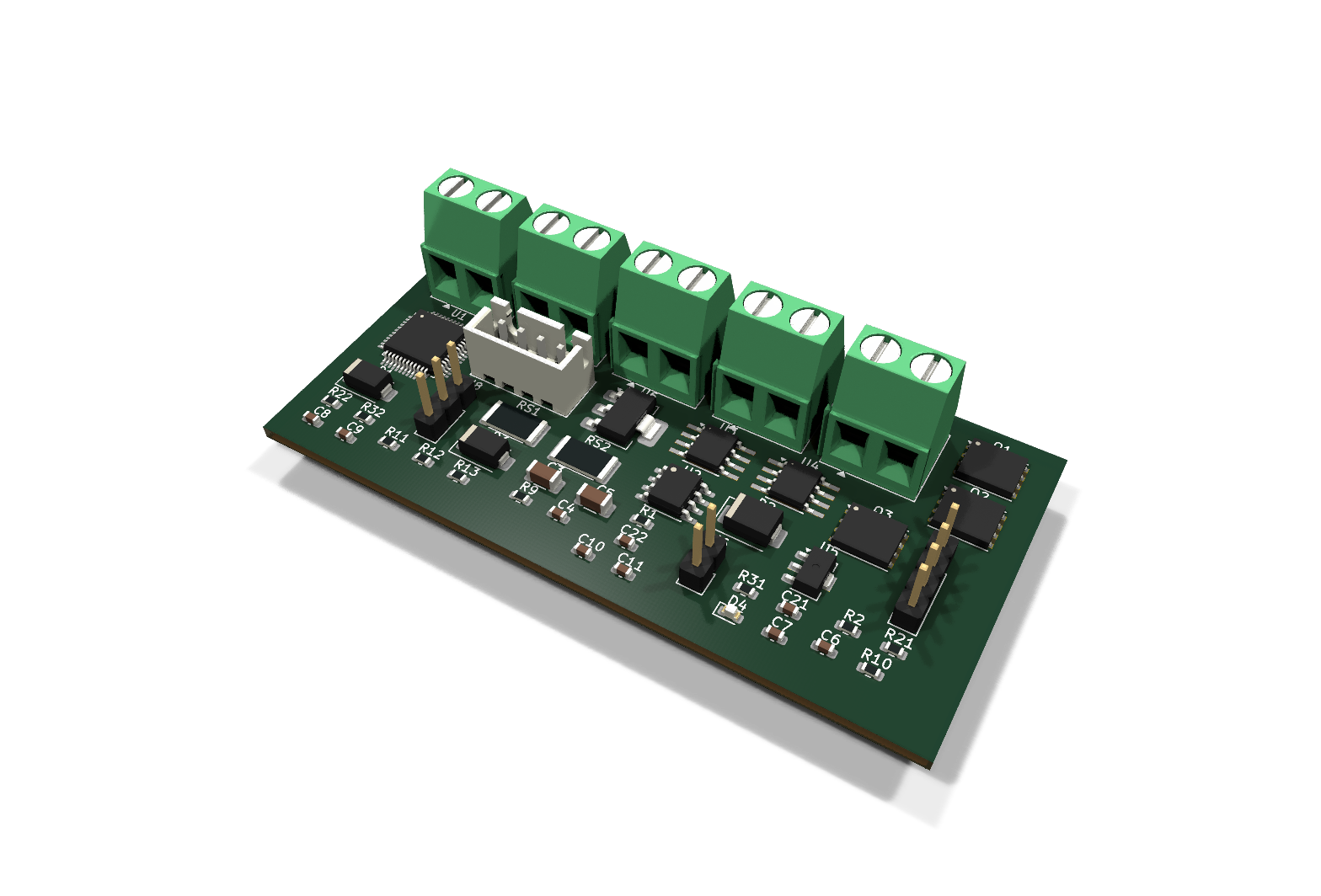
PCB
Future challenges
- Passing automotive EMC and transient tests on the first spin.
- Pinch detection without extra sensors.