Edge AI camera
Wi-Fi camera that runs small vision models on-device.
Function
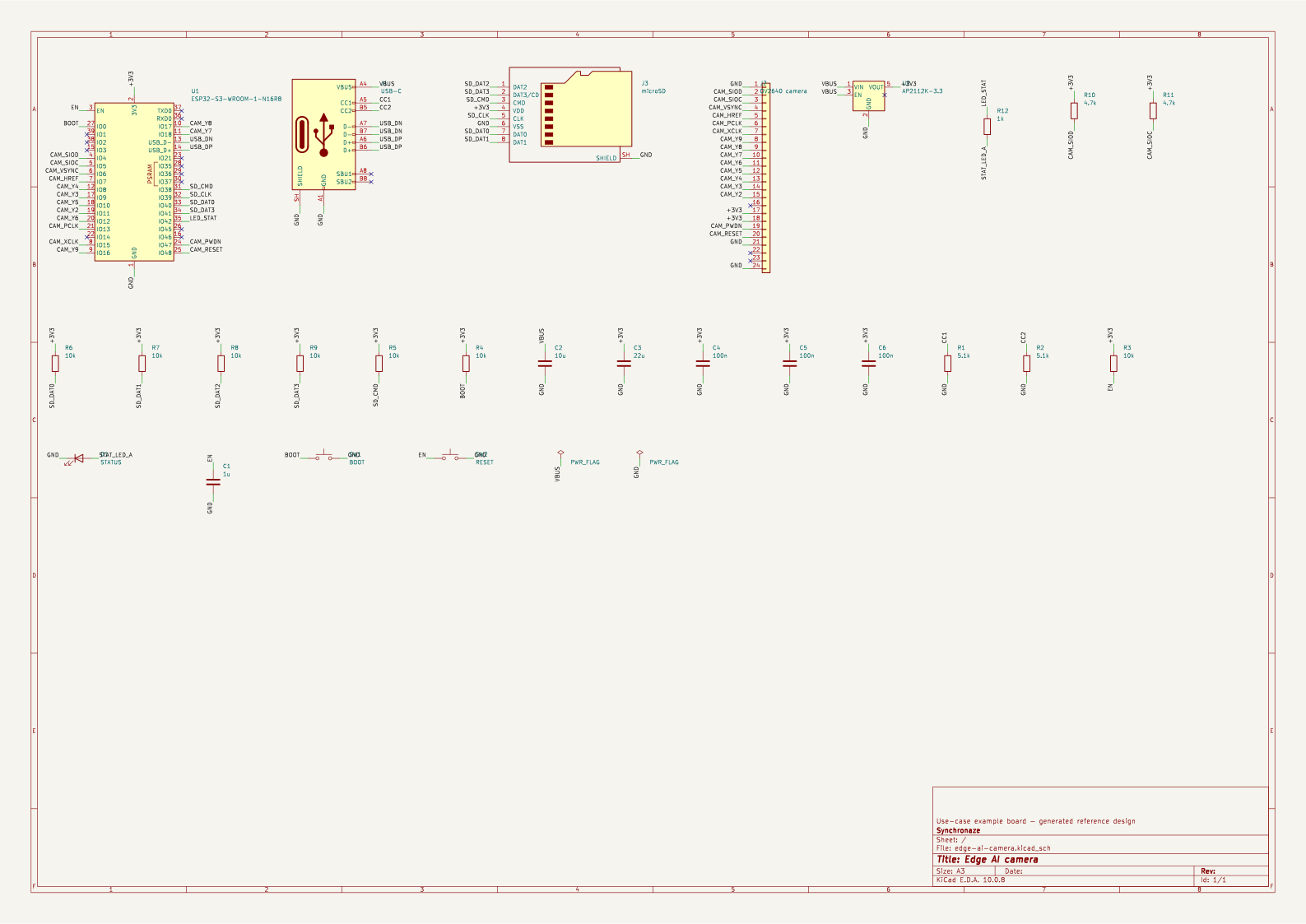
Captures images from an OV2640 sensor, runs lightweight neural-network inference on the ESP32-S3, sends only detections and metadata upstream instead of raw video, and logs clips to microSD.
Design choices
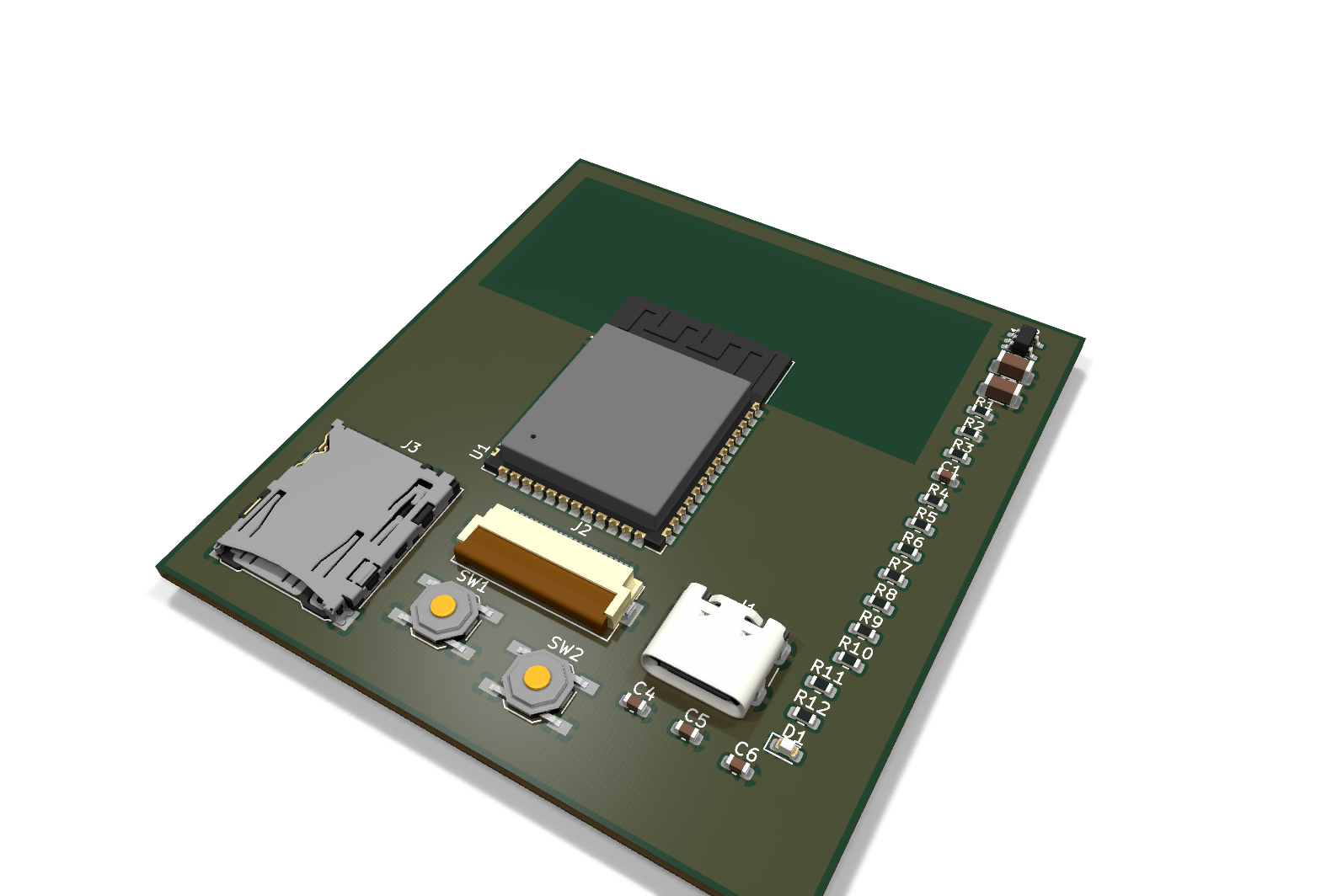
- ESP32-S3 module with 8 MB PSRAM and vector instructions for TinyML vision models.
- OV2640 camera on a 24-pin FPC using the 8-bit DVP interface.
- microSD slot for local clip storage when the network is down.
- USB-C power and programming, with boot and reset buttons.
Schematic
PCB
Future challenges
- Thermal management in a sealed outdoor enclosure.
- Updating models securely in the field.