Environmental sensor node
Battery-powered temperature, humidity and air-quality sensor.
Function
Wakes periodically, samples temperature, humidity, pressure and CO₂, sends readings over Wi-Fi or BLE, then returns to deep sleep to stretch battery life.
Design choices
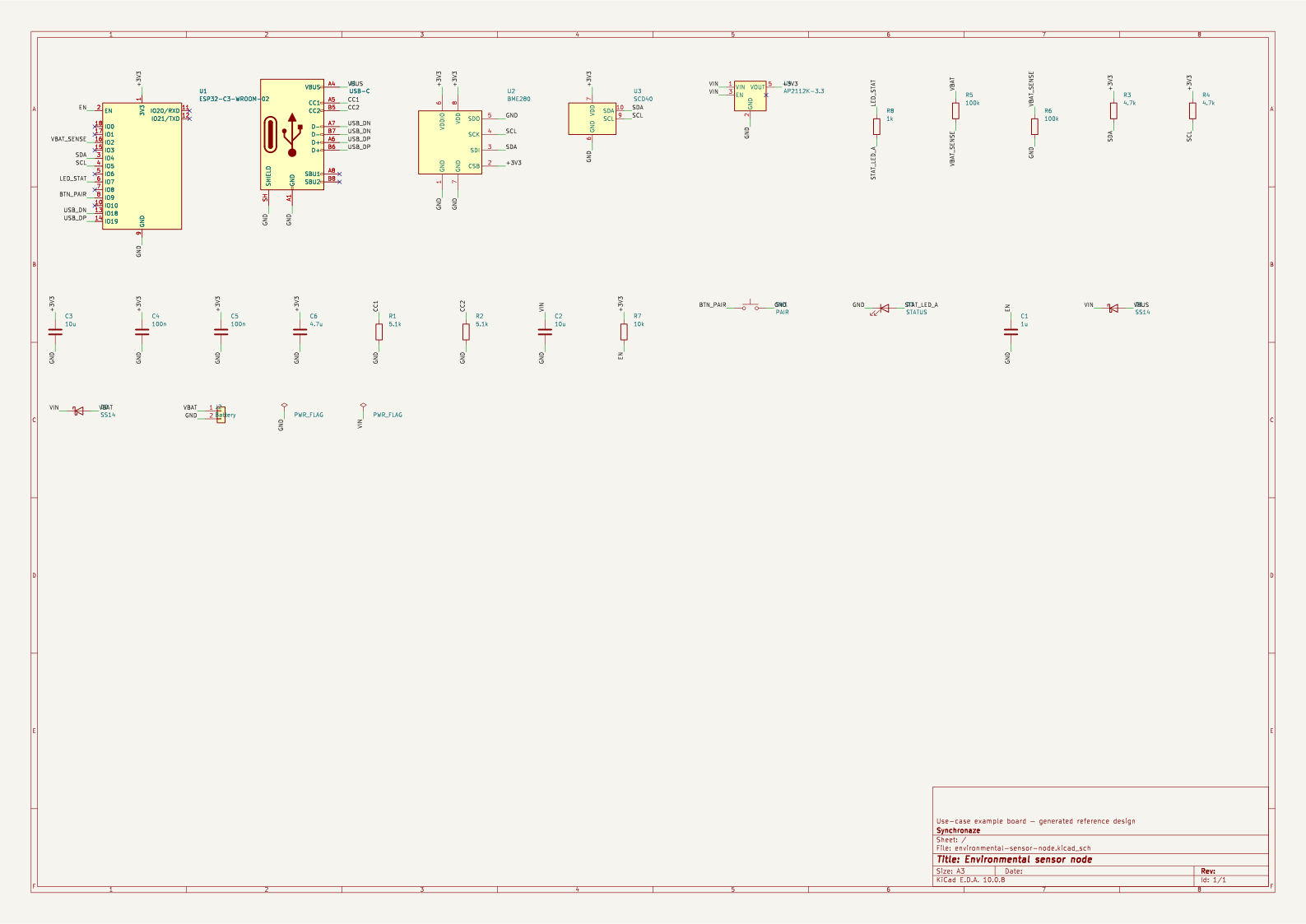
- Sensirion SCD40 photoacoustic CO₂ sensor plus a Bosch BME280 for temperature, humidity and pressure, both on I²C.
- ESP32-C3 module for Wi-Fi, with BLE 5 for provisioning from a phone.
- USB-C or battery power, OR-ed through Schottky diodes into one 3.3 V LDO.
- Battery voltage divider into the ADC so the node can report its own charge.
Schematic
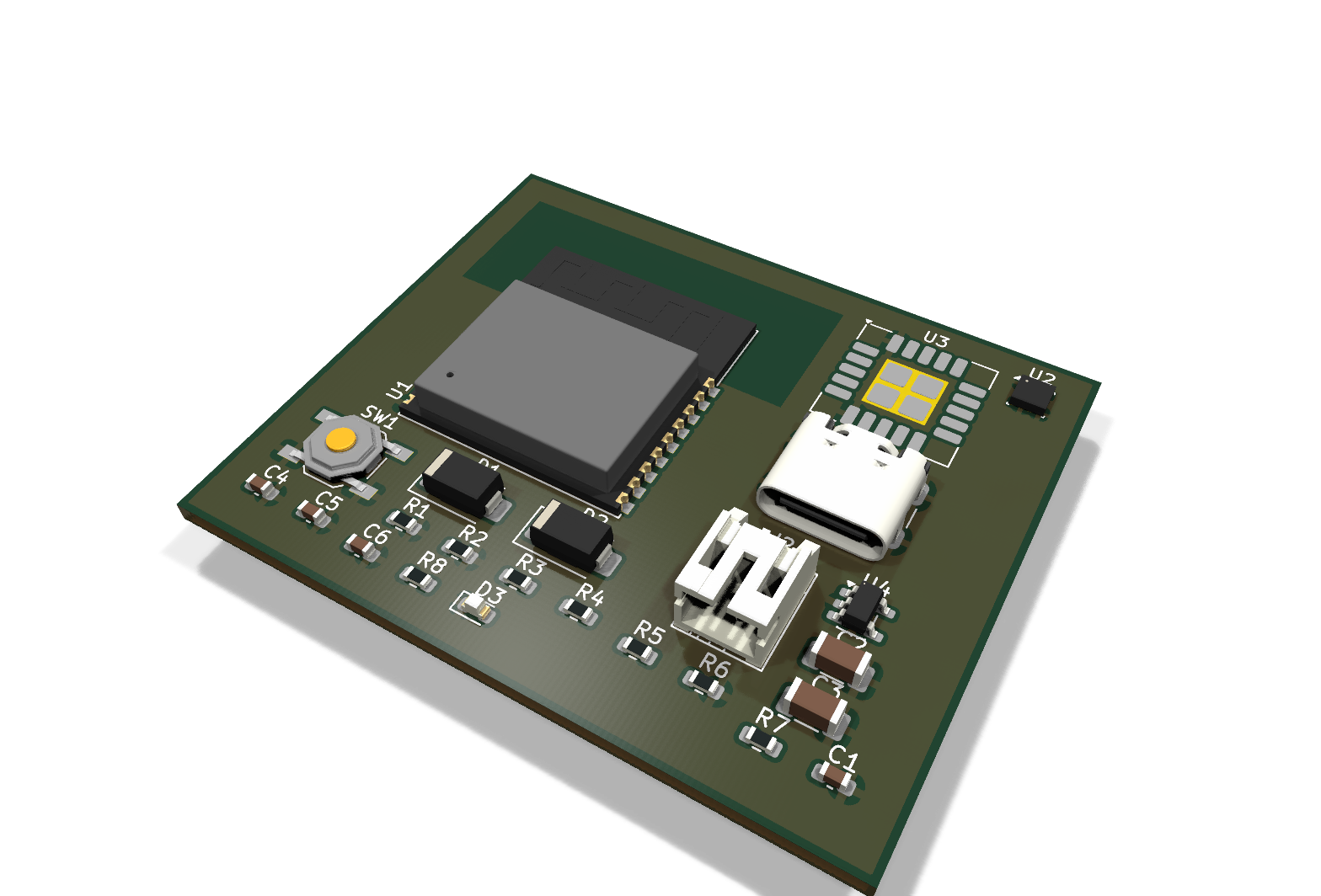
PCB
Future challenges
- Over-the-air firmware updates on a low-bandwidth link.
- Sensor drift compensation over years in the field.