Automated pipetting workstation
Multi-axis liquid handler for sample prep and plate workflows.
Function
Moves a pipetting head over a deck of plates and tubes on three stepper axes, drives the syringe pump for precise aspirate and dispense volumes, and exposes start/ready automation I/O so it can be scheduled alongside robotic plate handlers.
Design choices
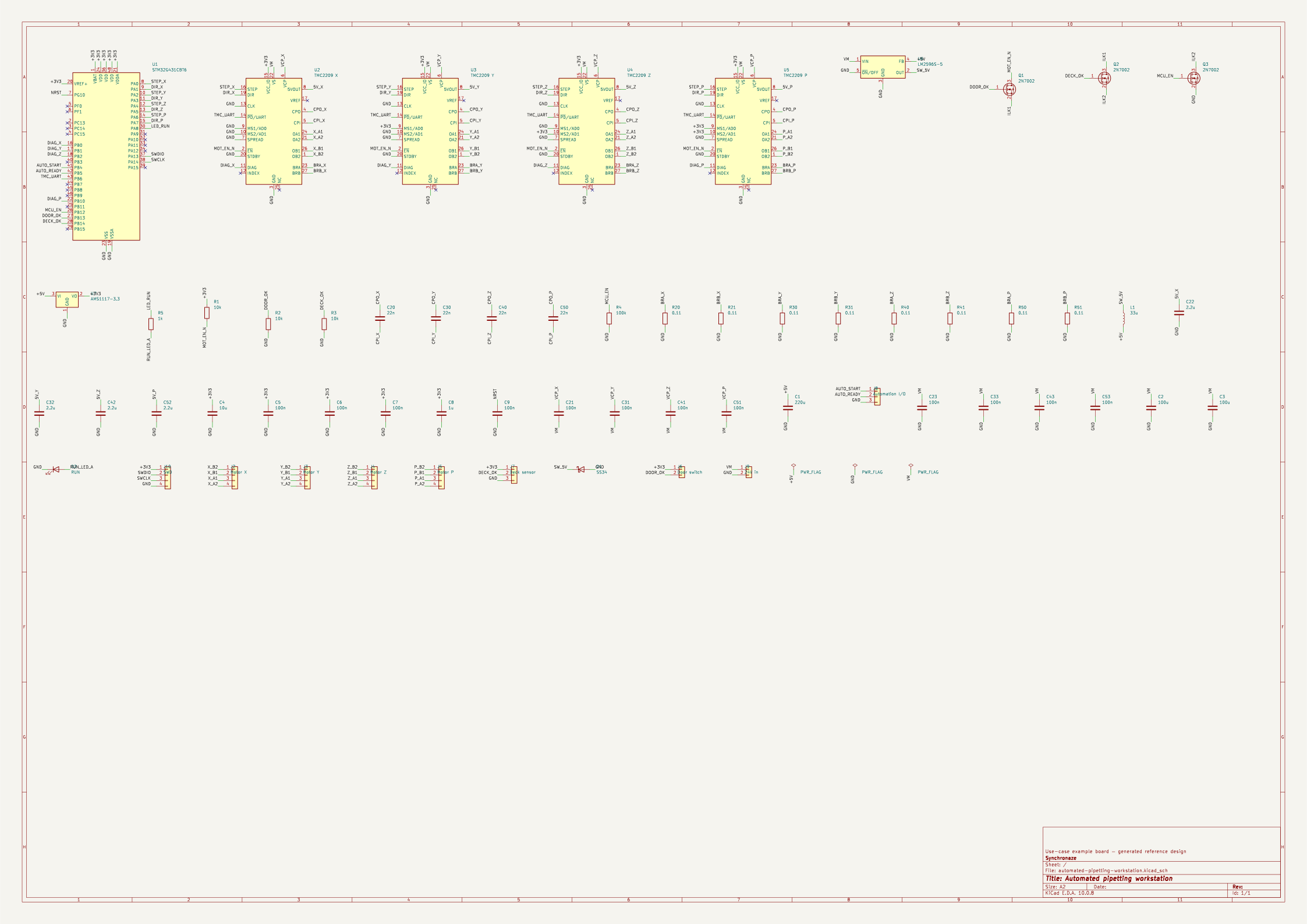
- Four TMC2209 stepper drivers (X, Y, Z and syringe pump) with StallGuard stall detection on DIAG and one shared UART for configuration.
- Hardware interlock: three MOSFETs in series hold the drivers' enable line, so motors only run with the door closed, the deck seated and the MCU agreeing.
- STM32G431 generating step/direction for all four axes and watching the stall flags.
- 24 V input with an LM2596 buck to 5 V and an AMS1117 for the 3.3 V logic rail.
Schematic
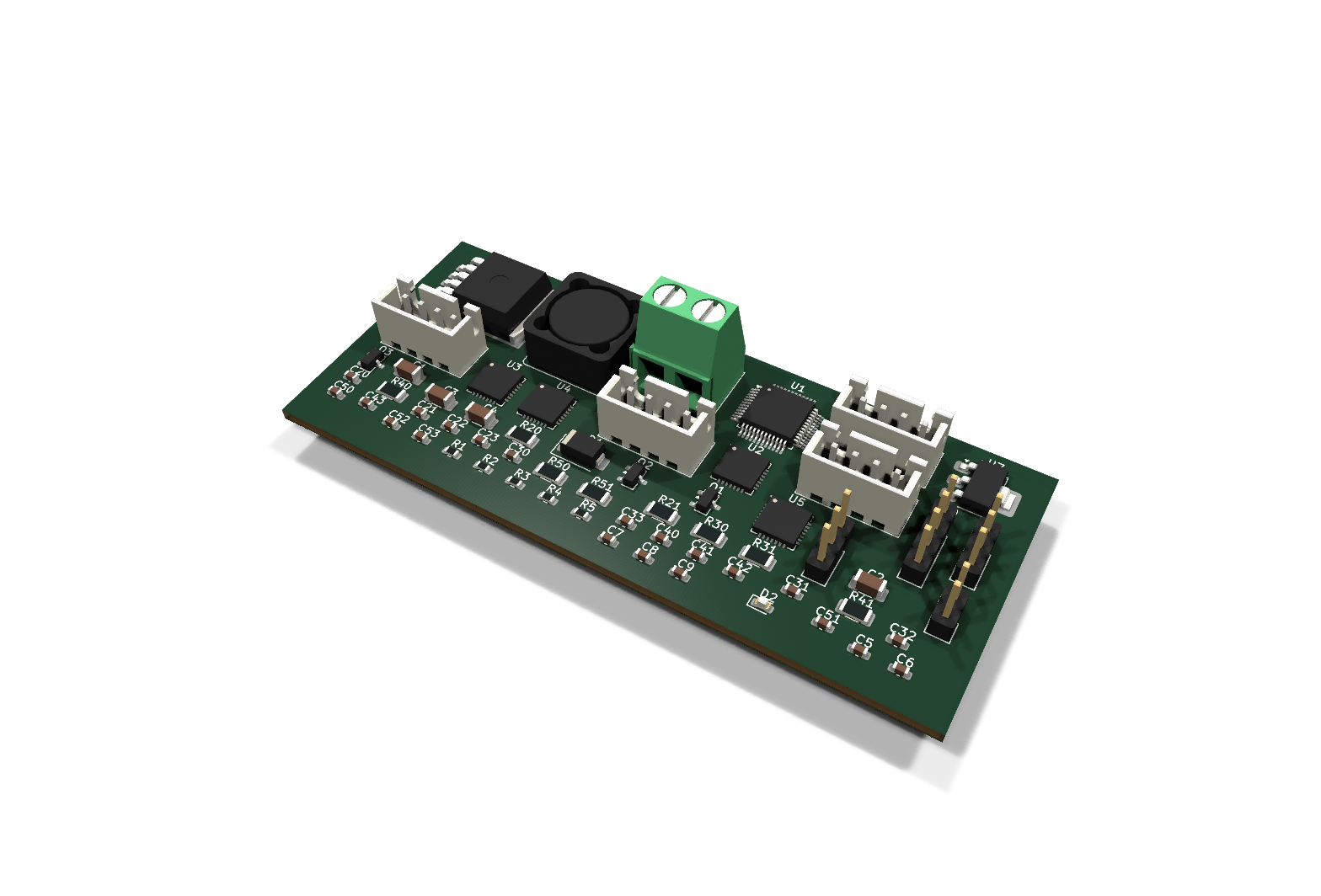
PCB
Future challenges
- Keeping motion current within limits during simultaneous moves.
- Integrating with many third-party scheduler and LIS protocols.
More in Medical / Life Sciences